PredictionToolkit
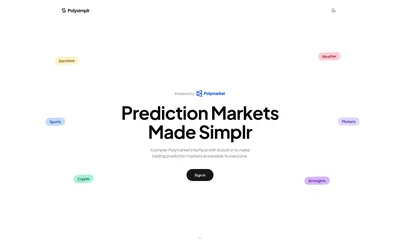
Shortlist markets, ask about price drivers and follow related headlines in one research interface.
366 tools. One searchable catalog.
Explore trading apps, analytics, APIs and research for the Polymarket and Kalshi ecosystems. Compare documented functions, costs and access requirements for the task you want to tackle.
Shortlist markets, ask about price drivers and follow related headlines in one research interface.
Explore an assistant concept combining market monitoring, social questions and large-wallet summaries.
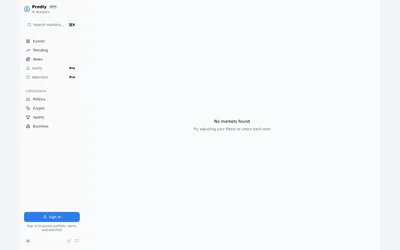
An AI research beta with event categories and gated monitoring, whose captured public Events list was empty.
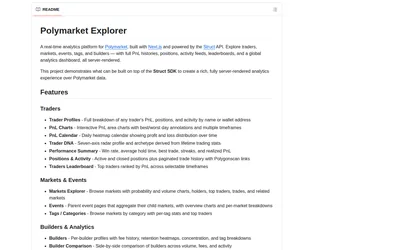
A Next.js analytics application reference with trader charts and market pages, requiring a replacement for its former backend.
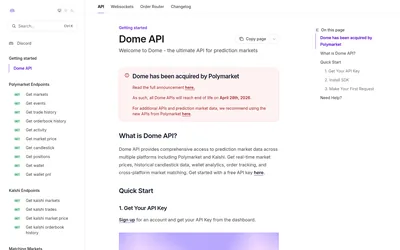
Retired hosted API toolkit retained as a reference for existing data and streaming integrations.
The Polymarket API and hosted Explorer have closed; use the shutdown guidance to replace an existing integration.
Explore workflows
Choose a task, then find the tools for each step.
Research a trader, then decide between simulated, manual and live copying. Review the costs and available controls at every stage.
Follow the workflow Discover → Inspect → MonitorCompare wallet trackers, examine positions and use activity records to understand the context of a trader’s actions.
Find wallet-tracking tools Choose data → Integrate → AnalyzeFind APIs, SDKs and historical datasets suited to your dashboard, research process or trading application.
Explore developer toolsLearn the essentials
Find out when public data needs no key and how authentication works for private CLOB requests.
Read guideMatch your task to Gamma, CLOB or Data API, and distinguish market IDs, outcome-token IDs and wallet identifiers.
Read guideUnderstand Polymarket outcome shares, pUSD, bids and asks, fees and settlement rules. Follow a simple payout example before choosing research or trading tools.
Read guideExplore the apps, data services and research resources around Polymarket. Start with your task, then inspect each tool's features, costs and limitations before visiting the official product.
Move from trading interfaces and wallet research to APIs, infrastructure and learning resources. Categories describe the job a tool supports, so the same product may appear in more than one place.
Use guides and workflows to understand how the available tools fit together and which steps depend on a specific product or data source.