 PredictionToolkit

What is Adjacent?
A thematic basket of contracts does not automatically represent the probability of a single event. Probability-based indices use a 50–150 scale: subtract 50 from the index level to obtain the implied win probability. Total-return indices start at 100 and measure cumulative return; that probability conversion does not apply to them. Points indices use their own methodology. Reference rates are comparison benchmarks, not tradable contracts.
Read the construction methodology and governance documents for the ticker you are examining. If a composite contains child indices, inspect the effective weights of its underlying leaf markets before comparing venue outcomes. Public index, reference-rate and market catalogs use delayed snapshots rather than live execution feeds: the public snapshot tables refresh every 15 minutes, and the snapshot tier has a separate 15-minute delay.
Who it is for
- Researching a theme across several event contracts.
- Adding prediction-market context to news coverage.
- Evaluating benchmark methodology or a custom-index project.
Features and coverage
- Thematic indices
Explore baskets that group event contracts around a common subject.
- Categorical and return benchmarks
Distinguish the topic an index tracks from the method used to construct it and measure returns.
- Reference rates
Use dedicated reference-rate views alongside the index and market research.
- Research dashboards
Move between aggregate research products and the underlying events and markets.
- Daily and weekly briefings
Follow probability moves, volume, volatility and catalysts in daily or weekly editorial coverage.
- Methodology documents
Consult the construction methodology and governance documents before interpreting or comparing an index.
- API and custom indices
Use the data-API entry point or inquire about an index built for a particular subject.
- Different index scales
For probability-based indices on the 50–150 scale, subtract 50 to obtain implied win probability. Total-return indices start at 100 and measure cumulative return; points indices follow their own methods.
- Delayed public snapshots
Public index, reference-rate and market-catalog data use a delayed snapshot tier. The public tables refresh every 15 minutes, while the data have a 15-minute delay.
Workflows with Adjacent
Build a thematic watchlist
Choose an index, read its construction methodology, and inspect the underlying events and market news to investigate changes.
Prepare a market briefing
Start with the daily or weekly coverage, identify the relevant contract or theme, and use a research dashboard to add market context.
Evaluate a benchmark product
Establish what the chosen index measures and how its reference rate is defined. Those definitions give you the basis for requesting the relevant API access or describing the custom index you need.
Interpret a composite index
Identify the index type and read the ticker's methodology. If it includes child indices, inspect the effective leaf-market weights and compare the underlying venue outcomes; do not treat every index level as a probability.
Pricing and total cost
The public pages offer index discovery and editorial coverage. API access and custom-index work have separate inquiry paths; the main page does not publish a complete fee schedule.
Getting started
Before you start: Index constituents and interpretation depend on the construction methodology.
- Open Indices or Dashboards and select the topic you want to research.
- Read the methodology that applies to the selected index or reference rate.
- Use Markets and News to investigate moves in the underlying contracts.
- Subscribe to the daily or weekly coverage if that cadence suits your research.
- Inquire separately about API access or a custom index.
A constructed index does not necessarily equal the probability of an individual event; interpret it using its own methodology.
Useful links
What to check
- Index constituents and interpretation depend on the construction methodology.
- The reviewed research and benchmark entry points are separate from order entry.
- Public snapshot tables refresh every 15 minutes, and the data tier has a separate 15-minute delay.
A closer look
Ratings & reviews
User reviews 0
The main score switches to user ratings after 5 published reviews.
A specific example helps the next person choose the right tool.
Related tools
Browse category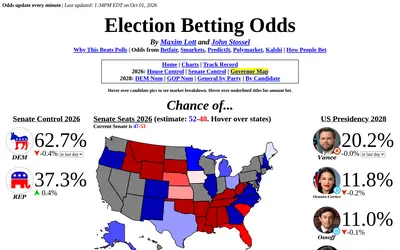
Election research linking cross-venue probability summaries with bid/ask ranges, past race movements and state maps.
- Access Web
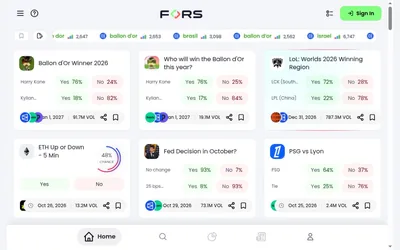

Compare venue-labelled events and investigate analytics and copy controls before assessing execution access and costs.
- Access Web


A live AI forecasting benchmark with resolved-event scores, comparable-event standings and inspectable research traces.
- Access Web
Frequently asked questions about Adjacent
Is Adjacent only a newsletter?
No. The reviewed offering also includes indices, reference rates, research dashboards and data-access entry points.
Can I request an index for my own topic?
Adjacent provides a separate inquiry path for custom-index work.
How should I interpret an index level?
Read that index's methodology. A thematic benchmark and a return-based product can measure different things.
Can I place Polymarket orders through it?
The reviewed entry points focus on research and data, rather than order placement.
Can every index level be converted into a probability?
No. Subtracting 50 applies only to probability-based indices. Total-return and points indices use different units and methods, and reference rates are comparison benchmarks rather than tradable contracts.