 PredictionToolkit

What is Prediction Index?
Constituent tables expose markets, clusters, forecast groups, weights and Yes odds, including entries with no weight. A war starting and a ceasefire failing are different questions; neither basket is an authoritative probability of every geopolitical outcome or a single tradable contract.
The operator says Grok, GPT and Claude use independent prompts hiding market prices. Machine history begins with the first experiment, without backfilling. The captured page showed a September 29 machine run and August 25 constituent revision; LIVE labels do not establish current inputs.
Who it is for
- Researchers following geopolitical contract baskets.
- Readers comparing market aggregates and model forecasts.
- Builders mapping the prediction-market ecosystem.
Features and coverage
- Separate baskets and venues
Inspect escalation and peace separately on Polymarket and Kalshi views.
- Visible constituents
Read markets, clusters, forecast groups, weights and Yes odds, including zero-weight entries.
- Market/model comparison
Compare individual Grok, GPT and Claude assessments and their spread with the market, preserving different timestamps.
- Ecosystem directory
Filter projects by outcome type, chain and status. Classifications are research leads rather than independent confirmation of capabilities.
Workflows with Prediction Index
Explain an index move
Select venue and basket, inspect the largest weights and open underlying contracts to compare resolution conditions.
Investigate disagreement
Check model date and rules, then examine the largest gaps and model spread without treating older model values as current prices.
Pricing and total cost
The homepage, directory and Chaos Index are publicly readable without an account or displayed paid plan. A complete commercial API or subscription offer is not established.
Access: The research-subscription call to action is separate from reading the index.
Getting started
Before you start: Weighted event baskets do not cover every possible geopolitical outcome.
- Open Chaos Index and select the relevant venue.
- Read constituents, weights, revision date and machine-run date.
- Use gaps to select questions for investigation, then verify original rules and current prices.
Displayed model and constituent dates predate the source review; a LIVE label does not establish fresh data.
Useful links
What to check
- Weighted event baskets do not cover every possible geopolitical outcome.
- Escalation and peace are different event groups, not exact opposites.
- Freshness and reconstruction of the aggregate are not independently established.
A closer look
Ratings & reviews
User reviews 0
The main score switches to user ratings after 5 published reviews.
A specific example helps the next person choose the right tool.
Related tools
Browse category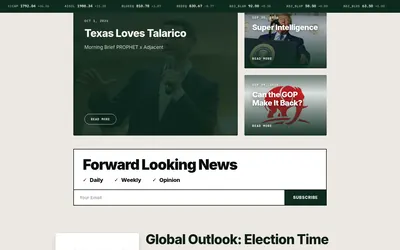

Follow themes across event contracts using constructed indices, reference rates, research dashboards and market briefings.
- Access Web · API · Email
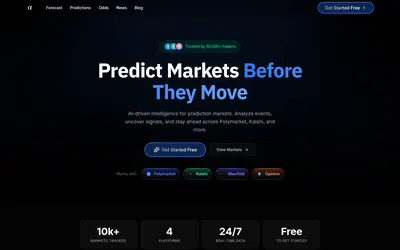

Request an AI forecast from a link, question or image, then compare market odds and news context.
- Access Web
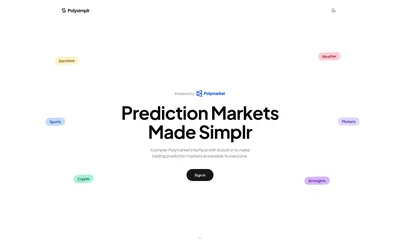
Shortlist markets, ask about price drivers and follow related headlines in one research interface.
Frequently asked questions about Prediction Index
Can I buy Chaos Index as one contract?
No order-entry workflow is established. It is an aggregate of constituent questions.
Does LIVE mean the model ran today?
No. The capture showed a September 29 run and August 25 constituent revision; read explicit dates.
Is machine history backfilled?
The operator says it starts at the first experiment without backfilled historical forecasts.
Are war and peace complementary probabilities?
No. They group different questions, such as war starting and ceasefire failure.