 PredictionToolkit
What is Kalshi?
Read the resolution source, threshold, observation window and payout timeline before interpreting an event price. An order book shows resting liquidity, but the headline probability may differ from the price available for your full size. Manage working orders and positions separately, including any unfilled remainder.
A limit order that matches immediately is a taker; maker treatment and fees depend on the series. Designated series can charge maker fees when resting orders fill. The event-contract fee schedule should be kept separate from Kalshi's perpetual-futures margin and fee rules, and a broker route can add broker charges.
Who it is for
- Trading event contracts directly through an exchange.
- Researching weather or economic-release contracts.
- Developing market-data and account integrations through an API.
Features and coverage
- Topic discovery
Filter a broad market catalog by subject.
- Related market groups
Compare thresholds and related event outcomes.
- Price and probability charts
Review how a market's displayed values have changed over time.
- Order-book depth
Inspect available prices and resting liquidity before choosing size.
- Limit-order management
Choose a price and manage orders that remain working.
- Portfolio views
Distinguish positions, balances and order history.
- Combos
Access supported contracts spanning multiple events.
- Developer API
Build documented market-data and account workflows.
- Incentive programs
Inspect the liquidity programs that apply to particular markets.
Workflows with Kalshi
Research a release
Read the contract's named source, threshold, observation window and payout timeline.
Work an order
Inspect depth, set price and size, and monitor any remainder that has not filled.
Compare across venues
Match contract rules and include the fees for the specific series before calculating a price gap.
Pricing and total cost
The general event-contract taker model is M × 0.07 × C × P × (1−P), with the schedule's rounding. Designated series use the maker formula M × 0.0175 × C × P × (1−P); other resting orders have a zero maker multiplier. The event-contract schedule lists no membership or settlement fee. ACH deposits and withdrawals are listed as free, while payment-rail and broker costs can differ.
Getting started
Before you start: A headline probability may differ from the price available for the full order size.
- Find the exact event contract.
- Read its rules and settlement source.
- Complete the account's eligibility and verification requirements.
- Choose a supported funding method.
- Inspect depth and fee information beside the order.
- Manage open orders separately from positions.
Maker fees vary by series, and a limit order that matches immediately is a taker.
Useful links
What to check
- A headline probability may differ from the price available for the full order size.
- Perpetual futures have separate margin and fee rules.
- Orders through a broker can incur additional broker charges.
- A resting limit order is not universally maker-fee-free; the series and fill status matter.
A closer look
Ratings & reviews
User reviews 0
The main score switches to user ratings after 5 published reviews.
A specific example helps the next person choose the right tool.
Related tools
Browse category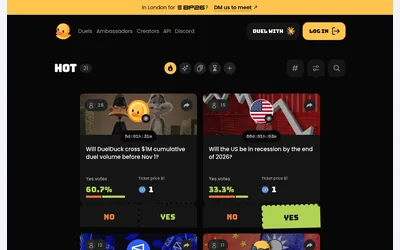

A separate Solana prediction venue for community-created yes/no duels and embeddable event questions.
- Access Web
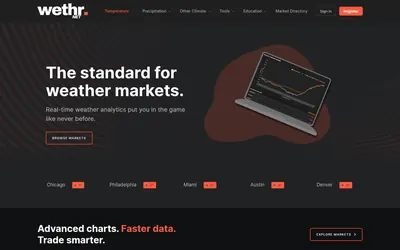

Weather-market research combining station observations, forecast-model comparisons, bias tools, alerts and tiered APIs.
- Access Web · API
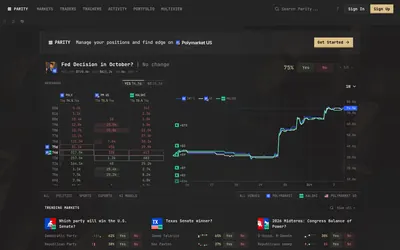

Compare prices and visible book sizes while keeping Polymarket, Kalshi and Polymarket US distinct.
- Access Web
Frequently asked questions about Kalshi
Are all resting orders fee-free?
No. Designated series charge maker fees when the resting order fills.
Is there a settlement fee?
The event-contract fee schedule lists none.
Can developers access the exchange?
Yes. The exchange provides a documented API.
Does canceling an unfilled resting order incur a maker fee?
The reviewed help page says it does not.