 PredictionToolkit

What is ZEIT Finance?
The worldview interface accepts a written belief and proposes a selection of live markets before any deposit. Inspect each underlying contract to determine whether its wording actually represents that belief. A public map lets users browse worldviews and their market pricing, but the homepage’s market strip is explicitly example data.
The provider describes continuous mark-to-market valuation, rolling daily entry and exit windows and support for seven chains. A tradable vault token and redemption through a daily window are different liquidity paths; neither implies unlimited instant redemption at a fixed price. Holdings, unit accounting and vault-specific terms must be read together.
Who it is for
- For researchers comparing portfolio-level prediction products and builders expressing a thesis across markets.
- For users evaluating vault valuation, fees and the distinction between token sales and redemption.
Features and coverage
- Translate a belief into markets
Enter a thesis, inspect the proposed portfolio and use the public map to explore how other worldviews are priced.
- Community and Prime products
Explore community-built or algorithmic vaults and separately curated Prime portfolios; compare their underlying events for shared exposure.
- Token units and daily windows
The model represents a vault share with one ERC-20 token, values holdings continuously at market and describes rolling daily entry/exit windows across seven supported chains.
Workflows with ZEIT Finance
Inspect every proposed contract
Enter a belief and check the rules of every proposed market before deciding whether the portfolio expresses the intended thesis.
Evaluate terms before depositing
Read holdings, unit valuation, gains-based fees and redemption terms, then choose a supported network and review the entry quote.
Compare shared underlying exposure
Look for repeated events across strategies rather than assuming that different vault names imply diversification.
Pricing and total cost
The homepage describes fees on gains but does not provide a complete numeric vault-fee schedule. Use the specific vault terms and the entry or redemption quote to assess costs.
Getting started
Before you start: Secondary token trading and daily redemption are distinct; the page does not establish unlimited instant redemption at a fixed price. Vault-specific terms are needed for gains-based fees.
- Open the worldview interface or vault directory and inspect the proposed underlying markets.
- Read vault accounting and fees and select a supported network.
- Review daily entry/exit mechanics and the quote before depositing.
The homepage market strip is labeled example data, not a current portfolio valuation.
Useful links
What to check
- Secondary token trading and daily redemption are distinct; the page does not establish unlimited instant redemption at a fixed price. Vault-specific terms are needed for gains-based fees.
A closer look
Ratings & reviews
User reviews 0
The main score switches to user ratings after 5 published reviews.
A specific example helps the next person choose the right tool.
Related tools
Browse category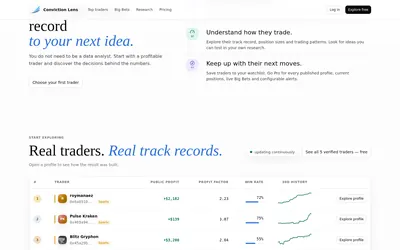
Selected Polymarket trader records, portfolio diagnostics and delayed or live large-trade monitoring.
- Access Web
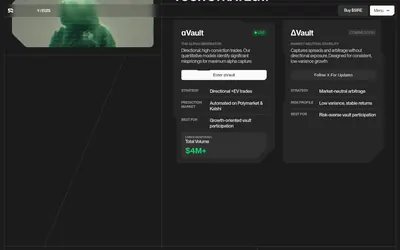
Token-gated sports analytics through aLink and a separate USDC directional vault with non-transferable units.
- Access Web
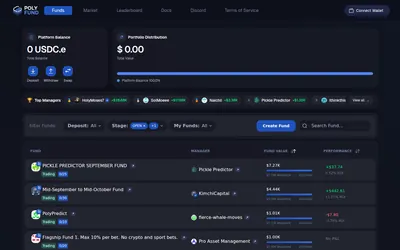

Compare managed prediction funds before committing capital for their trading period.
- Access Web
Frequently asked questions about ZEIT Finance
What represents a vault share?
An ERC-20 vault token under the provider’s described model.
Are exits necessarily instant?
The provider describes daily entry/exit windows; a tradable token is a separate liquidity mechanism.