 PredictionToolkit
What is PolySpotter?
A large print is only the start of PolySpotter’s research. Its feed combines trade size with wallet history, new-wallet activity, timing, price impact and flow patterns. Each alert exposes the wallet, outcome, execution price, amount and time, so you can examine the action behind the label. The described $3,000-plus criterion is not a universal minimum: smaller trades can appear when other signals select them.
Event hubs bring related markets together, while cross-market views show a wallet’s listed positions and their combined tracked amount. Category filters, topic tags and a curated daily email brief support further reading. Labels such as unusual or coordinated flow describe patterns; they do not establish common wallet ownership or privileged information. The published graded-call record uses hypothetical fixed stakes and does not show a particular user’s realized account return.
Who it is for
- Researchers investigating unusual public trade activity.
- People who want related signals grouped at event level.
- Readers who prefer a daily email summary of selected activity.
Features and coverage
- Notable-trade details
Inspect the wallet, outcome, execution price, size and time behind an alert.
- Multiple selection signals
The documented approach considers large trades, wallet records, new-wallet activity, timing, price impact and flow patterns.
- Event hubs
Review signals from constituent markets together under a broader event.
- Cross-market positions
Inspect a wallet’s related positions and the total amount tracked across different questions.
- Wallet research pages
Follow a public address from an alert to its accumulated signal record.
- Topics and categories
Filter sports, politics, crypto, geopolitics and more specific topic tags.
- Daily email brief
Receive a curated summary and follow links into the underlying research.
- Published call simulation
Inspect the graded-call record with its hypothetical fixed stake for each assessed call.
Workflows with PolySpotter
Investigate a large position
Open an alert, inspect the wallet and compare the execution price with the current state of the event.
Check overlapping signals
Use the event hub to distinguish entries from different markets from repeated activity in the same question.
Read a cross-market thesis
Inspect the listed legs and total exposure, then read each contract’s rules before treating the positions as a single directional view.
Pricing and total cost
The public feed, event and wallet research, and daily-brief signup are accessible on the website. The reviewed public page does not list a separate paid-subscription schedule.
Getting started
Before you start: Trade size alone does not explain every item in the feed.
- Open the feed and choose a topic you follow.
- Inspect the wallet, execution price, size and time of a selected trade.
- Open its event hub to review grouped signals.
- Read the wallet page for additional context.
- Subscribe to the daily email brief if you want a recurring summary.
The $3,000-plus size criterion is only one selection signal; smaller trades can also appear.
Useful links
What to check
- Trade size alone does not explain every item in the feed.
- Unusual or coordinated-flow labels do not establish wallet ownership or privileged knowledge.
- The published call illustration uses hypothetical fixed stakes, not an actual user’s account return.
A closer look
Ratings & reviews
User reviews 0
The main score switches to user ratings after 5 published reviews.
A specific example helps the next person choose the right tool.
Related tools
Browse category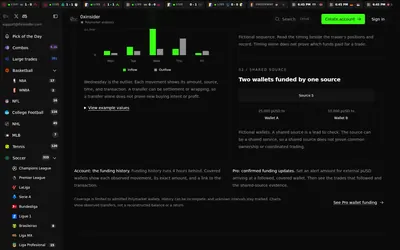

Compare sports prices and graded-wallet exposure, inspect unusual trades and connect the same research to an API.
- Access Web · API · MCP
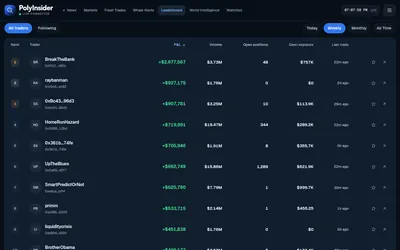
A free Polymarket research dashboard connecting large buys, first-recorded trades, wallets and news.
- Access Web
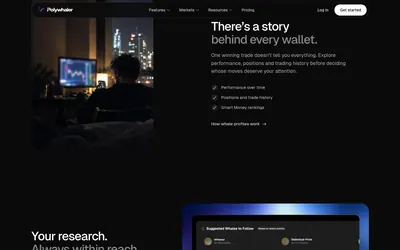

Whale feeds and explained wallet scores, with Orca paper/live portfolios and a separate Quant data plan.
- Access Web · Telegram · Discord · API · iOS
Frequently asked questions about PolySpotter
Are all alerts for trades above $3,000?
No. Size is one criterion, and the public feed also contains smaller trades selected for other reasons.
What does an event hub group?
It brings together signals from related markets within the same broader event.
Can I trace an alert to a wallet?
Yes. The research links to public-wallet pages.
Is there a daily digest?
Yes. Daily Brief is offered by email.