 PredictionToolkit

What is Polymarket Documentation & Learn?
The former Learn destination now leads into Polymarket’s documentation. Start here to distinguish an event from its markets, understand outcome tokens and prices, and trace what happens from an order to a position and eventual redemption. The same library explains negative-risk structures, authentication and smart-wallet arrangements.
For builders, the learning path continues into discovery, quotes, analytics, real-time data and the first-order quickstart. Use current API and SDK references together with the examples, checking migration notes before adapting older code. A documented capability may still carry beta status or eligibility requirements; reading the guide does not demonstrate that a live account workflow has been tested.
Who it is for
- People learning how prediction-market outcome shares and settlement work.
- Developers connecting Polymarket data or authenticated trading.
- Researchers checking the wallet and resolution assumptions behind another tool.
Features and coverage
- Market concepts
Explain events, markets, prices, outcome tokens and negative-risk structures before interpreting a product’s claims.
- Order lifecycle
Follow the creation and management of orders and distinguish these stages from holding a position.
- Wallet documentation
Read the authentication, smart-wallet and session-key material relevant to the integration.
- Market-data paths
Find guides for market discovery, quotes, analytics and real-time data.
- First-order quickstart
Move from prerequisite concepts to the official guide for submitting an initial trading order.
- Resolution and redemption
Understand how a market outcome is resolved and when an outcome token becomes redeemable.
- Fees and programs
Consult separate explanations of fees, rebates, liquidity rewards and builder programs, including their conditions.
- Changes and migrations
Read changelogs and migration guidance for changes to SDKs, APIs and wallet assumptions.
Workflows with Polymarket Documentation & Learn
Check another tool’s claim
Locate the official explanation of the claimed mechanism, such as redemption or order expiry, and compare its conditions with the tool’s description.
Build in a useful order
Read the core concepts first, then the market-data guide, and proceed to authenticated trading after understanding those prerequisites.
Adapt an existing integration
Use changelogs and migration guides to identify changed endpoints, types and wallet assumptions before reusing an older example.
Pricing and total cost
The documentation is publicly readable. Trading costs, API conditions and incentive eligibility are covered in the relevant sections; they are not a subscription price for reading the documentation.
Getting started
Before you start: Some material is written for developers rather than first-time traders.
- Choose the concept or integration workflow you need to understand.
- Read the prerequisite pages linked from that guide.
- Keep the current API or SDK reference beside the implementation examples.
- Check changelogs and migration notes when adapting older code.
- Use consistent wallet and market identifiers throughout the integration.
The Learn address redirects into the documentation, where some pages assume developer knowledge.
Useful links
What to check
- Some material is written for developers rather than first-time traders.
- Older examples found elsewhere may use superseded wallet or API models.
- Beta labels and eligibility conditions can limit how a documented feature applies.
- Documentation review is not a live account or trading test.
A closer look
Ratings & reviews
User reviews 0
The main score switches to user ratings after 5 published reviews.
A specific example helps the next person choose the right tool.
Related tools
Browse category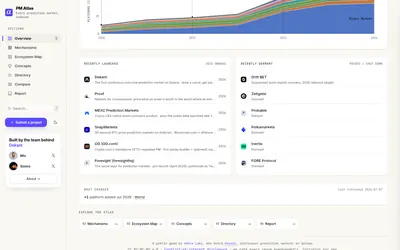

An ecosystem directory linking venues, mechanisms and concepts with side-by-side comparisons.
- Access Web
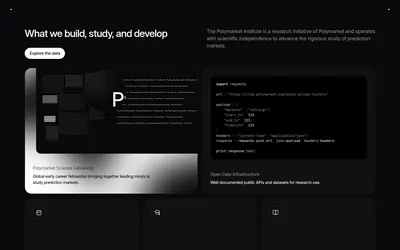

Polymarket-funded research, data-resource navigation and a selective fellowship for early-career PhD researchers.
- Access Web
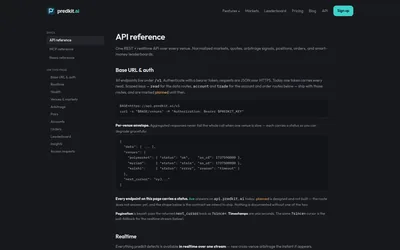
Normalized multi-venue data, matched markets and resumable alerts, with explicit feature-status limits.
- Access API · MCP
Guides and workflows
Frequently asked questions about Polymarket Documentation & Learn
Is this an official Polymarket resource?
Yes. The material is hosted on Polymarket’s own documentation domain.
Do I need to be a developer?
The core concepts also explain mechanisms that matter to users. Implementation and API sections are more technical.
Are fees explained?
Yes. A dedicated fees section sits alongside documentation for related programs and incentives.
Where should I look for API changes?
Read the changelogs and migration guides, and compare older examples with the current reference.