 PredictionToolkit

What is OPINION?
Browse macro, crypto, pre-TGE, equities, politics and sports questions, then compare the event’s outcome contracts. Read the measurement period and resolution source before expressing a view. Portfolio analytics show positions and performance, while points and VIP programs track activity or fee discounts separately from realized profit.
Resting liquidity can qualify for maker incentives, but a limit order is not automatically a maker order. Fees apply per matched fill, so crossing several prices can matter. For small tickets, the minimum charge can dominate the curve-based percentage even after multiplicative discounts; the platform’s coverage of trade-settlement gas does not cover every other action.
Who it is for
- Traders researching macro-event contracts.
- Users supplying resting order-book liquidity.
- Developers integrating venue data and trading.
Features and coverage
- Market categories and quotes
Discover macro, crypto, pre-TGE, equities, politics and sports questions and compare available outcome contracts.
- Portfolio and PnL
Review positions and performance in the trading workspace.
- Wallet or social access
Choose a documented Web3-wallet or supported social-account connection path.
- Maker liquidity incentives
Provide resting liquidity under the applicable rebate program and distinguish it from immediate taker fills.
- Points and VIP programs
Inspect activity points and fee-discount programs separately from trading profit.
- Resolution and dispute documentation
Read the documented outcome process and the selected market’s resolution terms.
- Developer interfaces
Use Open API, WebSocket and Python/TypeScript CLOB SDKs for data and trading integrations.
Workflows with OPINION
Research a macro event
Match the measurement period and resolution source to the forecast you intend to express.
Compare order costs
Check whether the order rests or crosses, inspect its matched-fill path and include the minimum fee for a small ticket.
Integrate data before execution
Start with documented identifiers and streams, then add authenticated execution after validating the data workflow.
Pricing and total cost
Makers are not charged trading fees. Taker fees use market coefficient × P × (1−P), applied to notional with multiplicative discounts. The docs describe rates up to 1%, subject to a $0.25 minimum, so small trades can have a higher effective percentage. Minimum order and withdrawal amounts are $5. Trade match/settlement gas is covered, while some other actions have user-paid gas.
Getting started
Before you start: Discounts do not remove the $0.25 minimum fee.
- Read the selected market’s rules and choose a wallet or supported social login.
- Confirm settlement asset and chain, then inspect the market’s coefficient and discounts.
- Check whether a limit order will rest or match immediately, then track fills, PnL and resolution.
The $0.25 minimum fee still applies when discounts reduce the curve-based fee.
Useful links
What to check
- Discounts do not remove the $0.25 minimum fee.
- Fees are assessed per matched fill, which matters when an order crosses several prices.
- A limit order is not automatically a maker order.
- Points are separate from realized trading profit.
A closer look
Ratings & reviews
User reviews 0
The main score switches to user ratings after 5 published reviews.
A specific example helps the next person choose the right tool.
Related tools
Browse category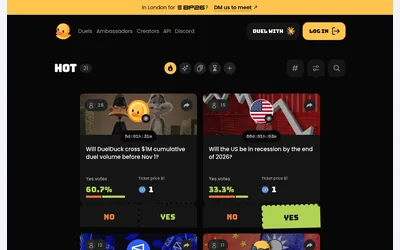

A separate Solana prediction venue for community-created yes/no duels and embeddable event questions.
- Access Web
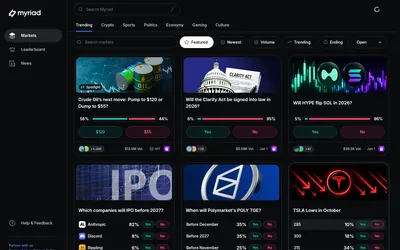

Trade outcome shares after distinguishing the market model, order behavior and applicable fee schedule.
- Access Web · API · CLI
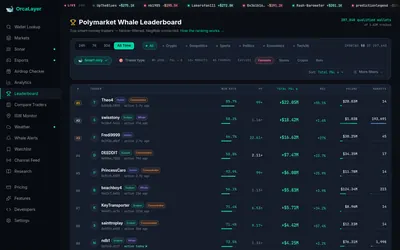

Read-only Polymarket wallet research with farming filters, monitoring and licensed data access.
- Access Web · Telegram · API
Frequently asked questions about OPINION
Do makers pay trading fees?
The published policy says makers are not charged trading fees. A limit order must actually rest rather than match immediately to be treated accordingly.
Can discounts reduce the fee below $0.25?
The listed minimum still applies after discounts.
Are developer tools available?
The documented stack includes Open API, WebSocket and Python/TypeScript CLOB SDKs.
Does the user always pay settlement gas?
The docs say the platform covers trade matching and settlement gas; some other actions still have user-paid gas.