 PredictionToolkit

What is Elastics?
A workflow can scan markets or follow a defined basket, test numerical, text and time conditions, and run order management at selected intervals. Draft, running and stopped states and per-run logs make the configured process inspectable.
AI assists in constructing the graph; the documented agent follows it deterministically at runtime rather than letting AI decide freely on every trade. Access remains private beta, and Hyperliquid is listed as upcoming. Venue setup differs: Polymarket uses its funding route while Kalshi requires a Key ID and RSA credentials.
Who it is for
- Traders converting repeatable screens into schedules.
- Users who want to inspect AI-created rules before starting them.
- Teams reviewing strategy runs and exposure together.
Features and coverage
- Visual and AI builder
Create a rule graph manually or ask AI to assemble one.
- Scanner and tracker
Scan eligible markets or follow a defined basket.
- Condition filters
Combine numerical, string and time conditions.
- Budget and exposure
Set a fixed allocation and exposure limits.
- Scheduled execution
Run the configured order-management graph at intervals.
- Run lifecycle
Manage draft, running and stopped states and inspect system logs.
Workflows with Elastics
Automate a market screen
Build scanner filters and an allocation cap, then inspect the complete graph. Choose an interval and use logs to see which conditions passed.
Track a basket
Specify the markets, attach conditions and order logic, and inspect runs before expanding the budget.
Pricing and total cost
The documented Polymarket and Kalshi trading paths carry no Elastics service trading fee, while venue and network costs remain payable separately. AI actions use credits earned from eligible trading volume; the lifetime credit total is calculated as the square root of eligible lifetime trading volume.
Getting started
Before you start: The documented automation is restricted to private-beta access.
- Enter through the private-beta access flow.
- Set up Polymarket funding or Kalshi Key ID and RSA credentials for the chosen venue.
- Create a draft graph and inspect inputs, filters and exposure limits.
- Set the schedule, start the agent and review run logs.
Private-beta access is required.
Useful links
What to check
- The documented automation is restricted to private-beta access.
- AI builds rules but has no runtime discretion in the documented model.
- Polymarket deposit addresses can change; use the current deposit dialog.
- Hyperliquid is upcoming, not a confirmed current venue.
A closer look
Ratings & reviews
User reviews 0
The main score switches to user ratings after 5 published reviews.
A specific example helps the next person choose the right tool.
Related tools
Browse category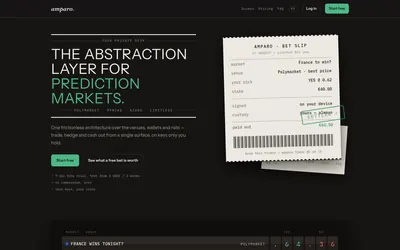

Compare supported venues, inspect local signing and use modular access with separate funding and contract checks.
- Trading mode Manual
- Access Web
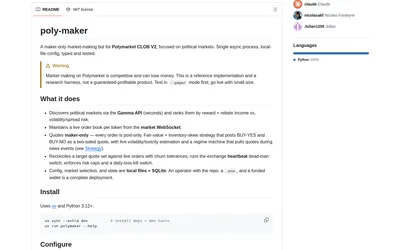
Run inventory-aware maker quotes with local settings, exposure caps and a paper pipeline using live market data.
- Trading mode Paper · Live automation
- Access CLI
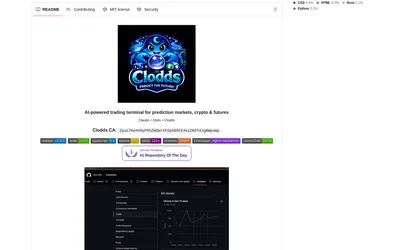
Run market research and configured strategy tools through a local chat gateway and supported messaging channels.
- Access Web · Telegram · Discord · MCP
Frequently asked questions about Elastics
Does AI choose each trade freely?
No. The agent guide describes deterministic runtime execution of the configured graph.
Can I inspect an agent's actions?
The product describes per-run system logs and explicit lifecycle states.
How do credits accrue?
The lifetime total equals the square root of eligible lifetime volume. Growth from $100 to $400 increases total credits from 10 to 20, adding 10 credits. AI actions consume credits.