 PredictionToolkit

What is OrcaTrace?
Free indexes, sample response shapes, movers briefs and track-record routes let a developer inspect the service before choosing a paid endpoint. The whale scorecard ties logged calls to resolved market outcomes, offering context for past calls rather than every future wallet trade.
Signals, current digests, historical digests and deep research are different responses with different prices. Paid calls settle in USDC on Base through x402. A small request can be inexpensive, but an autonomous loop still accumulates charges across calls; retain identifiers and track the aggregate.
Who it is for
- Developers building research agents.
- Users needing occasional data without a subscription.
- Analysts comparing wallet calls and settled outcomes.
Features and coverage
- Free previews
Read indexes, sample shapes, movers briefs and track records.
- Feed signals
Request individual items or batches.
- Whale calibration
Inspect the scored table of logged whale calls.
- Intelligence digests
Retrieve the current digest or historical records.
- Resolving-market list
Find markets approaching resolution.
- Single-market research
Request a deeper response for one selected contract.
- Base USDC access
Use the supported x402 payment request flow.
Workflows with OrcaTrace
Keep research bounded
Read free briefs and samples, pick one market and buy only the next detail needed.
Compare a wallet call
Compare a signal with its calibration record and the underlying market resolution.
Build a resolution watchlist
Query resolving markets, then select contracts for deeper research.
Pricing and total cost
No account or API key is required. Paid requests settle in USDC on Base; discovery and track-record routes are free.
Signal
US$0.01/item or US$0.03/batch
- Feed items.
Whale table
US$0.05/call
- Calibration table.
Digest
US$0.10/call
- Current intelligence digest.
Deep research
US$1/call
- Single-market research.
Fees and usage costs
- Resolving-market lists cost US$0.02; historical digests cost US$0.05. Discovery and track records are free.
Getting started
Before you start: Track aggregate costs across repeated requests.
- Read free samples and the endpoint index, then choose the call and expected cost.
- Configure an x402 client for Base USDC and request a bounded result.
- Retain source and market IDs and track total spending.
An autonomous research loop can accumulate many per-call charges.
Useful links
What to check
- Track aggregate costs across repeated requests.
- Calibration describes past logged calls, not every future trade.
- Deep research and digests differ from feed items.
- The API returns research and signals without order execution.
A closer look
Ratings & reviews
User reviews 0
The main score switches to user ratings after 5 published reviews.
A specific example helps the next person choose the right tool.
Related tools
Browse category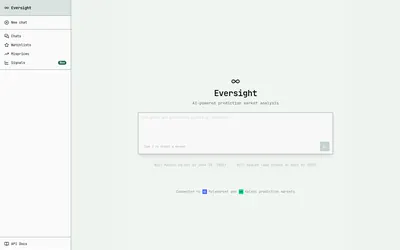
Request probabilities and retrieve attributed market signals through separate Numinous research APIs.
- Access Web · API
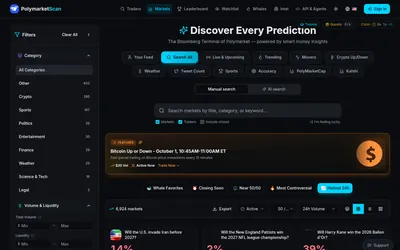
Find markets and public wallets, inspect category results and build research prototypes with free agent endpoints.
- Access Web · API
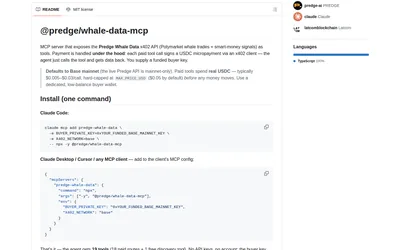
Discover endpoints freely, then pay per request for whale, wallet and supported outcome records.
- Access MCP
Frequently asked questions about OrcaTrace
Is an API key required?
The documented flow uses x402 payments instead of an account key.
What is free to inspect?
Indexes, samples, brief previews and whale track records.
What does a deep dive cost?
The listed single-market research call is US$1.
Can it place orders?
The listed endpoints provide research and signals.